What I Learned at the Consortium of Christian Study Centers Annual Meeting
What I Learned at the Consortium of Christian Study Centers Annual Meeting
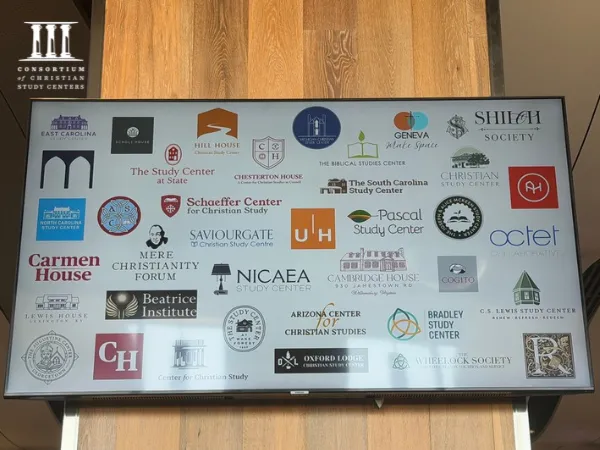
This summer, I joined leaders from Christian study centers across the country for the annual meeting of the Consortium of Christian Study Centers. I came away grateful, encouraged, and even more expectant about what God is doing at Rice University through the Rice Christian Study Center.
One of the most compelling ideas I heard came from Upper House in Madison, Wisconsin. Their “moon shot” is bold: to help demonstrate that a new form of Christian higher education can thrive alongside and within America’s great pluralistic universities. Their work includes hospitality, Christian community, public lectures, scholarship, credit-bearing courses, faculty engagement, and digital resources. They are asking: What would it look like for Christian learning to serve the university—not by withdrawing from it, but by offering a faithful, intellectually serious, hospitable presence within it?
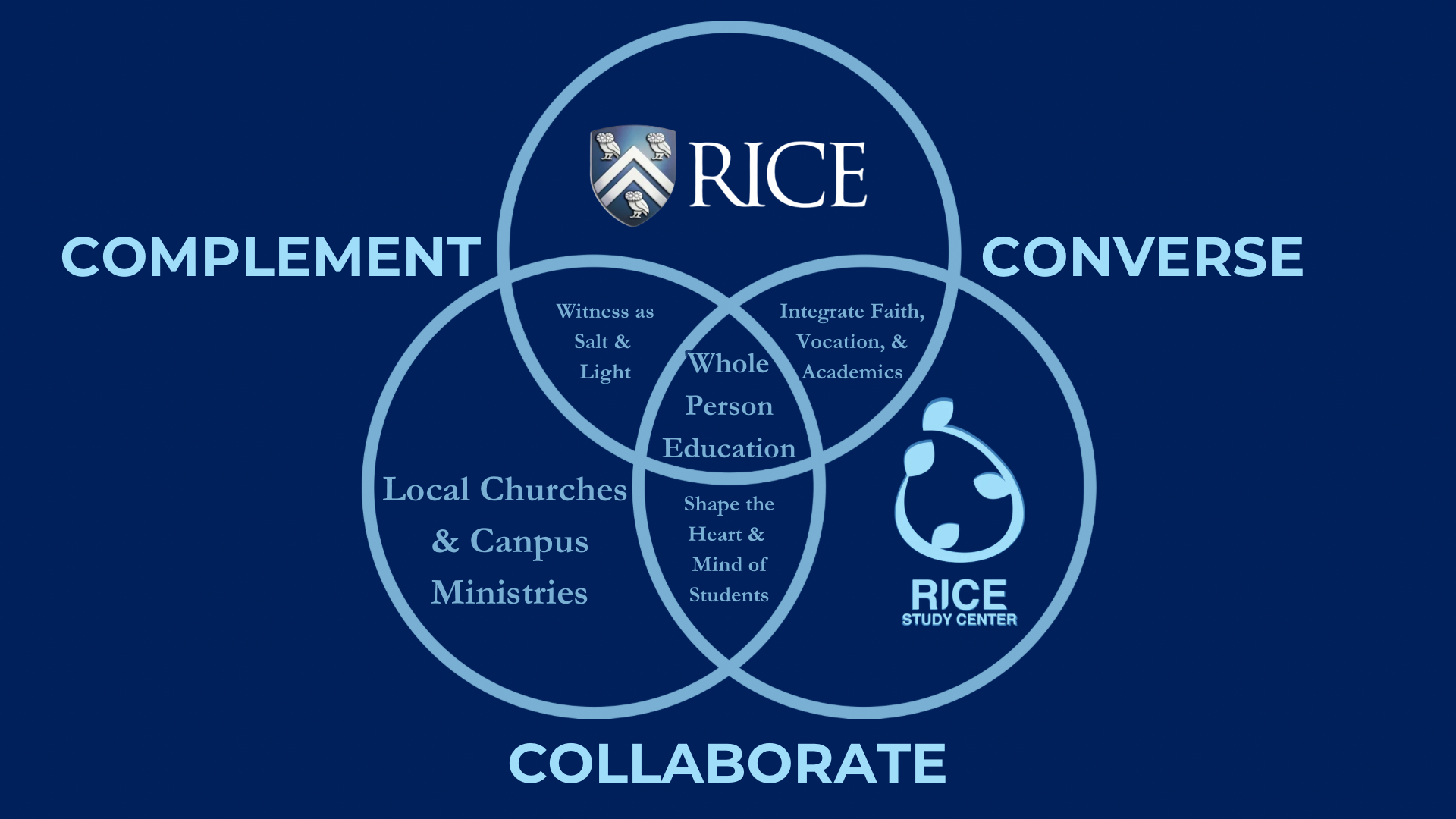
That vision resonates deeply with us at RCSC. We are not trying to create another campus program. We hope, by God’s grace, to help cultivate a Christian community of learning at Rice: a place where students, faculty, staff, alumni, churches, and friends of the university can bring faith into meaningful conversation with study, vocation, friendship, and the pressing questions of our time.
At the same time, one lesson from the gathering was clear: no two study centers are alike.
Each university has its own history, culture, opportunities, wounds, intellectual questions, and spiritual needs. A center at a large public research university may look different from one at a private university or a small liberal arts college. What succeeds in Madison, Minneapolis, Durham, or Cornell cannot simply be copied and pasted into Houston.
The question is not, “How can Rice Christian Study Center become exactly like another successful center?” The question is, “How can RCSC become a faithful, incarnate expression of the Gospel at Rice University?”
That calls for patience, prayer, deep listening, courageous imagination, and long-term relationships. It means learning the stories of Rice, loving the people God has placed here, and discerning where the Spirit is already at work. It means creating spaces where students can ask honest questions, where faculty can connect Christian faith with their disciplines, where friendships can deepen, and where the Christian story can be heard as intellectually serious, spiritually alive, and genuinely good news.
Another presentation, from Anselm House at the University of Minnesota, offered a hopeful picture of what a study center can become over time. Their leaders are thinking about how to serve not just a small group of students, but an entire university ecosystem: undergraduates, graduate students, faculty, staff, administrators, professionals, alumni, and community members.
Their insight was simple but important: people often enter Christian community through the concrete questions they already carry. A medical student may be drawn to a conversation about healthcare ethics. An engineering student may want to consider technology and human flourishing. A faculty member may be searching for colleagues who can think seriously about teaching, research, and vocation in light of Christ.
This is why Christian study centers matter. They create hospitable on-ramps into deeper formation. They help people discover that the Christian faith speaks not only to private spirituality, but also to the whole of life: our studies, work, intellectual commitments, relationships, communities, and hopes for the world.
The gathering also underscored the vital role of faculty. Edward Dixon of the Center for Christianity and Scholarship at Duke University challenged us to imagine study centers that invest deeply in Christian scholars and teachers. Faculty are not simply people we hope will attend our events. They are among the university’s most influential disciple-makers. They teach, mentor, research, advise, and shape the intellectual culture in which students live.
For RCSC, this is a particularly important calling. Rice is filled with gifted faculty, graduate students, researchers, and professionals. We hope to create a faculty collective over time: a community of Christian scholars and teachers who know one another, encourage one another, learn together, and help students see how Christian wisdom informs every field of inquiry.
But beneath all the ambitious vision, strategic planning, and institutional imagination, one speaker brought the conversation back to the essential calling: make disciples.
That is the center of it all.
We want students who know and love Jesus. We want faculty who see their scholarship and teaching as part of their Christian vocation. We want Christians at Rice to be formed by Scripture, sustained by friendship, equipped for faithful service, and prepared to make disciples wherever God sends them. We want RCSC to be a place of welcome, intellectual courage, prayerful presence, and enduring Christian community.
This fall, we will begin our “beta-test” semester: an early season of listening, gathering, learning, trying, adapting, and building relationships. We are eager to welcome students, faculty, staff, alumni, pastors, and friends into this work.
Would you join us?
• Pray for a fruitful first semester, wise leadership, meaningful relationships, and open doors at Rice.
• Come to an upcoming gathering, event, meal, or conversation as we begin building this community.
• Give to help establish the Rice Christian Study Center’s work among students and faculty at Rice University.
We are still in the beginning. But we are beginning with great hope: that God will make RCSC a faithful, thoughtful, and joyful expression of the Gospel at Rice—and that, through this work, many disciples will be formed to love Christ and serve the university, the church, Houston, and the world.
Grateful,
Rev. Dr. Creighton Alexander, PhD
Executive Director - Rice Christian Study Center
