School of Prayer
School of Prayer
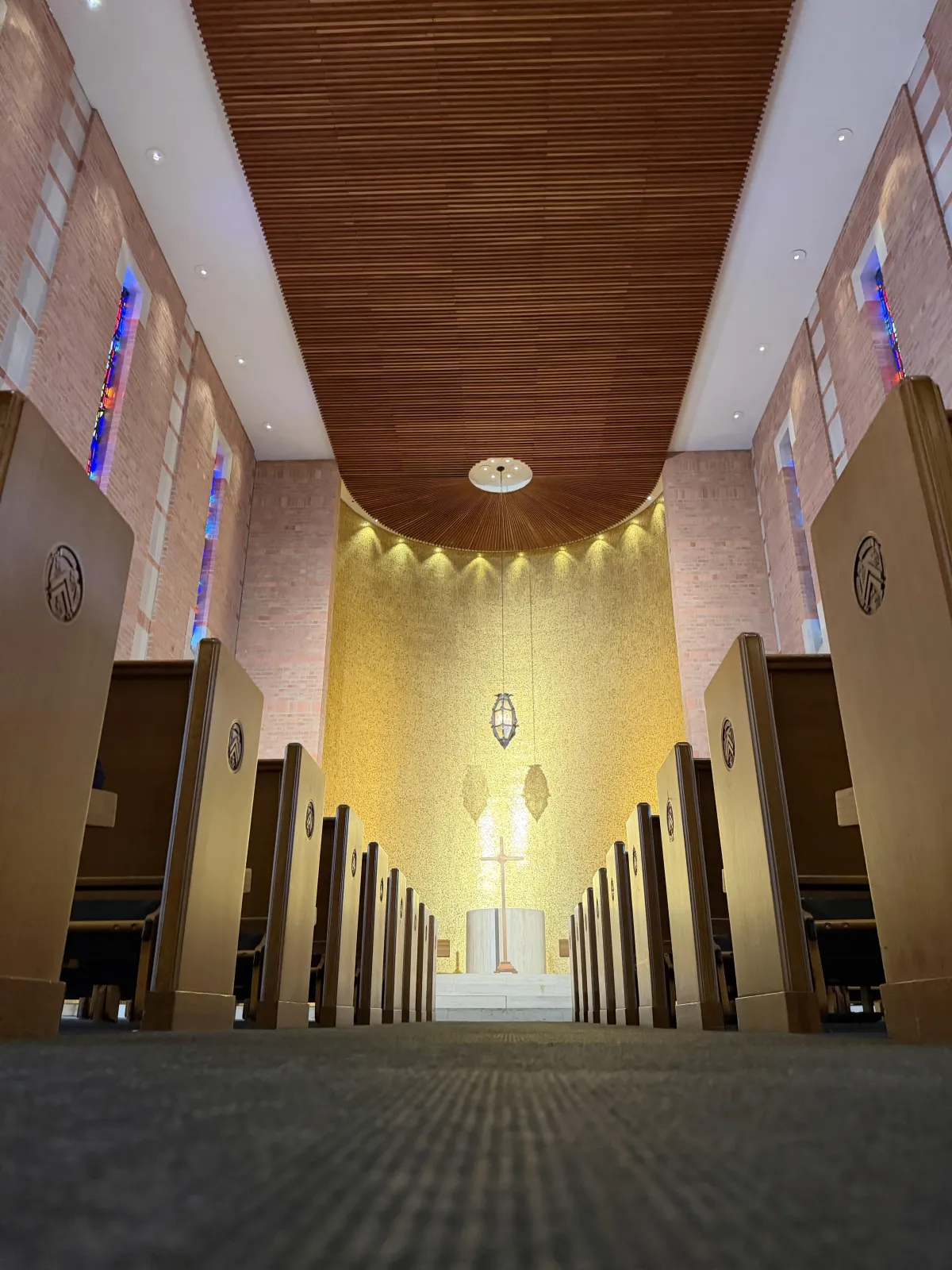
The first commitment of the Rice Christian Study Center has been to create a rhythm of prayer at Rice University. This spring, that commitment has taken concrete form through Weekday Daily Office services at the Rice Memorial Center Chapel. For me, prayer is not a program; prayer is the heartbeat of Christian life and community.
As I reflect on this past semester, three conversation partners have shaped this emerging practice: Dr. Kristen Johnson of Wycliffe College in Toronto (see her amazing lecture on prayer here), and Samuel Bray and Drew Nathaniel Keane through their book How to Use the Book of Common Prayer. Together, their voices have helped me see several practical lessons about prayer.
History deepens gratitude
The history of the Book of Common Prayer is long. Authorized in 1549, it did not appear out of nowhere; it gathered up prayers, readings, and liturgical patterns that reached far back into the life of the ancient church. Cranmer drew from the Western liturgical tradition, especially the medieval Sarum use, including prayers and structures that had already been prayed for centuries before the Reformation. In some cases, the Sunday lectionary preserved readings had shaped Christian worship for seven, eight, or even nine centuries, and some of the older Western patterns behind them can be traced still further back toward the age of Charlemagne and beyond.
That means the prayer book is not simply a sixteenth-century innovation, but a reforming English expression of very ancient Christian prayer. That history matters because it reminds us that prayer is not invented anew by each generation. We find when we pray, we take our place in a long conversation.
A praying people
The people of Rice are a praying people. In hosting weekday Daily Office services, the Rice Christian Study Center is joining an on-going conversation led by the Praying Rice Owls alumni, celebrated at their annual Homecoming Prayer Breakfast with all the campus ministries, and echoed in student gatherings like the Inter-Ministry Prayer and Worship Night this past Monday. All of these voices speak to the same desire: to see God move on campus.
Something old becomes new again
When it comes to the Book of Common Prayer, one phrase describes the current moment well - “something old becoming new again.” Many Christians are weary of novelty. They are hungry for depth, continuity, and spiritual steadiness.
The Book of Common Prayer is not new in the sense of being trendy. It is new in the sense that old wisdom is being rediscovered. In that way, it feels surprisingly fresh. In a university setting where so much of life is transitional, prayer reminds us that we belong to something older, broader, and steadier than the immediate pressures around us.
Prayer as family speech
One of the great gifts of this semester has been discovering how prayer unites students, faculty, campus ministries, alumni and local churches into one shared pattern of life. Prayer is family speech directed toward our Abba. We are not trying to earn our place in God’s household; we are learning to live as adopted children. As Dr. Johnson emphasized, we pray because we belong—to God and one another. That not only changes the tone of our prayers, but how we see each other.
Prayer is invitation, not performance
In a university culture that prizes performance, originality, and measurable results, the steady practices of Christian prayer have felt like an invitation to rest in God’s gift rather than our own spiritual productivity. Dr. Johnson named how easily prayer becomes weighed down by guilt. Many of us treat prayer like one more area where we must prove ourselves. But prayer is not a test. It is an invitation into relationship. We do not come to prayer to impress God. We come because God has already drawn near to us in Christ.
We never pray alone
In her talk on prayer, Dr. Johnson explained the Trinity’s role in prayer. The Father is the one to whom we pray, the Spirit is the one who helps us pray, and Christ is the one who intercedes for us. That means prayer is always surrounded by divine help. That matters when prayer feels weak or distracted. We are not left to manage prayer on our own.
This is where C.S. Lewis’s description of prayer is so helpful. In Mere Christianity, he writes that when an ordinary Christian kneels to pray, God is the goal he is trying to reach, God is also the power inside him that is pushing him on, and God is also the road or bridge along which he is being carried. In other words, prayer is never a lonely task. The whole Triune God is already at work in it.
We pray borrowed words
Another insight from both Dr. Johnson and Bray and Keane is the gift of borrowed words. Scripture, the Psalms, and the Book of Common Prayer all give us language when our own words are thin. Drawing on Bonhoeffer, Dr. Johnson emphasizes the importance of praying with the words of Scripture: “We learn to speak to God, because God has spoken to us and speaks to us… If we wish to pray with confidence and gladness, then the words of Holy Scripture will have to be the solid basis of our prayer.”
That is one reason the Book of Common Prayer has been so important for the rhythm of The Daily Office at Rice. Its Bible reading plan matters because prayer is not just about speaking to God; it is about being shaped by God’s Word on a daily basis. The prayer book weaves together prayer and Scripture so the Christian life is not built on isolated spiritual moments. It is built on sustained listening.
Repetition forms us
Bray and Keane also made a compelling case that repetition is not the enemy of spiritual vitality. In fact, it is one of the ways God forms us. We remember what we repeat. In hard seasons, we return to the familiar words that have already carried us.
That is one of the quiet strengths of liturgy. It gives us language that is stable enough to hold us when life is not stable. As George Herbert put it, “Prayer should be the key of the day and the lock of the night.” Prayer opens the morning and closes the night. It places ordinary time inside God’s presence. In other words, the prayer book is not just for moments of devotion. It is a pattern for Christian life.
As we have gathered week after week for The Daily Office at Rice, I have been grateful for that steadiness. Prayer has not felt flashy. It has felt faithful and full of promise. I catch a glimpse of it every time I speak Paul’s benediction in Ephesians 3:20-21:
Glory to God whose power, working in us, can do infinitely more than we can ask or imagine: Glory to him from generation to generation in the Church, and in Christ Jesus for ever and ever. Amen.
See you in the Chapel.
